
 The sunbird perch just above the location of the spitterbug.
 The sunbird have a closer look at the spitterbug.
 The sunbird drink the juice not sure if the sunbird do that in order to reduce the froth so that the bug can be exposed.
 The sunbird must have managed to catch the spiterbug together with the froth.
 The sunbird finish the whole thing - the bug and the froth all together.
 The sunbird continue to finish every bits of the froth.
The mass of froth are produced by the nymphs of spitterbugs to hide them away from their predator. It also act as an insulator against heat and to prevent them from drying out. Spittlebugs are related to leafhoppers, but have a broader body and they have faces that resemble frogs and thus are call froghoppers too.


 Carpenter bees is one of the largest bee in the world and they are solitary insects that do not form colonies.
  They may be large and heavy, but they have no problem maneuver their body from flower to flower.
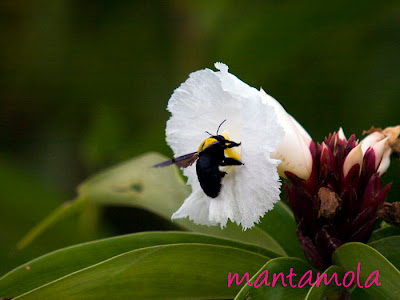

 Despite their size, they are important pollinators as well.
 A stylish landing by Stork-billed Kingfisher (Halcyon capensis)


 Perhaps this piece of meat is too big to finish at one go. The crow keeps the balance meat on the branch nearby.
 Using the bill to push and squeeze the meet, the bird managed to compress the meat to just a small lump and
 The photo above were taken at Pulau Ubin using a 500mm lens. With naked eyes, it looks exactly a lake monster!!!


 The Common Myna is just so beautiful when capture on photos.
 Since birds don't carry tissue paper or handkerchief, they just wipe their beak on the tree branches after drinking water.
 From far both Common &

 Nothing wrong with the birds, the tree branches nor the water. All of them are real except the photos are placed upside-down! Now, Do you still always believe what you see?
 The adult bee-eater (on the left with longer tail) feed the juvenile with dragonfly.
 The juvenile bee-eater with the mouth wide open waiting for the offer from the adult bird.
 The juvenile is adjusting the dragonfly before swallow it down the throat.
 The juvenile is trying to swallow another dragonfly and the adult is now back with bee in the mouth and knock the bee against the perch before eating it.


 The Blue-throated Bee-eater (Merops viridis) just stare at the bee and give it a miss and go for dragonfly instead.


